
When Extreme Heat Finally Became Visible
At ComNet 2025, a single poster about an often overlooked climate threat invited a slower, more careful look at how stories shape public understanding, and how attention shifts when an issue is seen from the angles where people actually live.
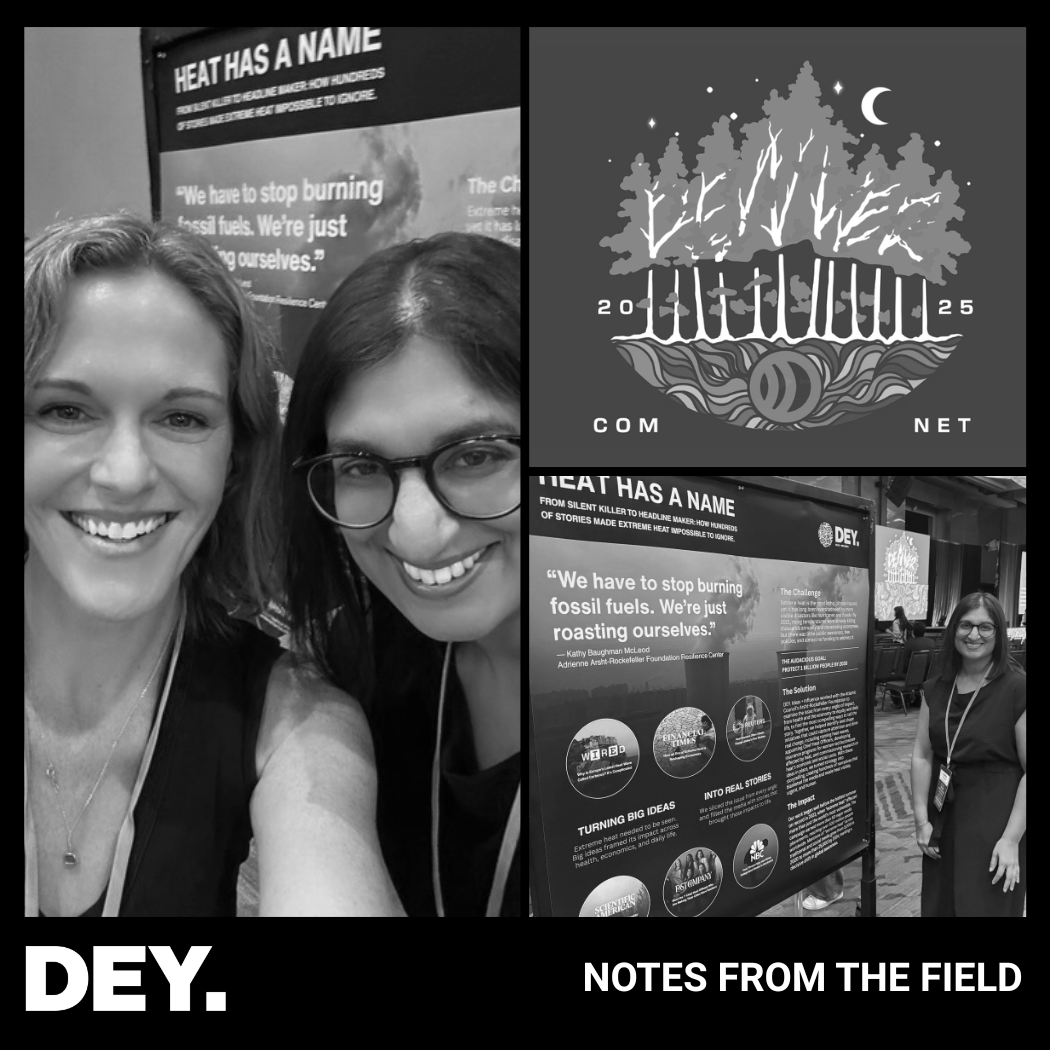
For years, public awareness of extreme heat has lagged behind its real-world impact. Floods and hurricanes usually steal the spotlight; heat continues to take more lives than any other climate hazard, mostly in silence. That gap in attention framed a poster session at ComNet 2025, but the story runs deeper than just what was presented at the conference. It reflects a long effort to bring visibility to a crisis that rarely announces itself.
The Climate Threat That Stayed Out of Sight
Extreme heat has always hovered at the edges of climate reporting. It is familiar enough to feel ordinary, and ordinary enough to go unnoticed. Yet the data paints a very different picture. Temperatures have climbed, mortality rates have followed, and communities are experiencing a kind of strain that is both widespread and unevenly felt.
The absence of public concern was never due to a lack of evidence; it was something more elusive. Heat does not lend itself to dramatic imagery. It is difficult to photograph, difficult to name, and difficult to locate in a single moment.
The work began with a shift in perspective: understanding heat not as a meteorological event but as a story about human lives, local economies, changing habits, and daily routines. Once the frame changed, the issue itself began to take on a more understandable shape.
How a Hidden Problem Entered the Public Conversation
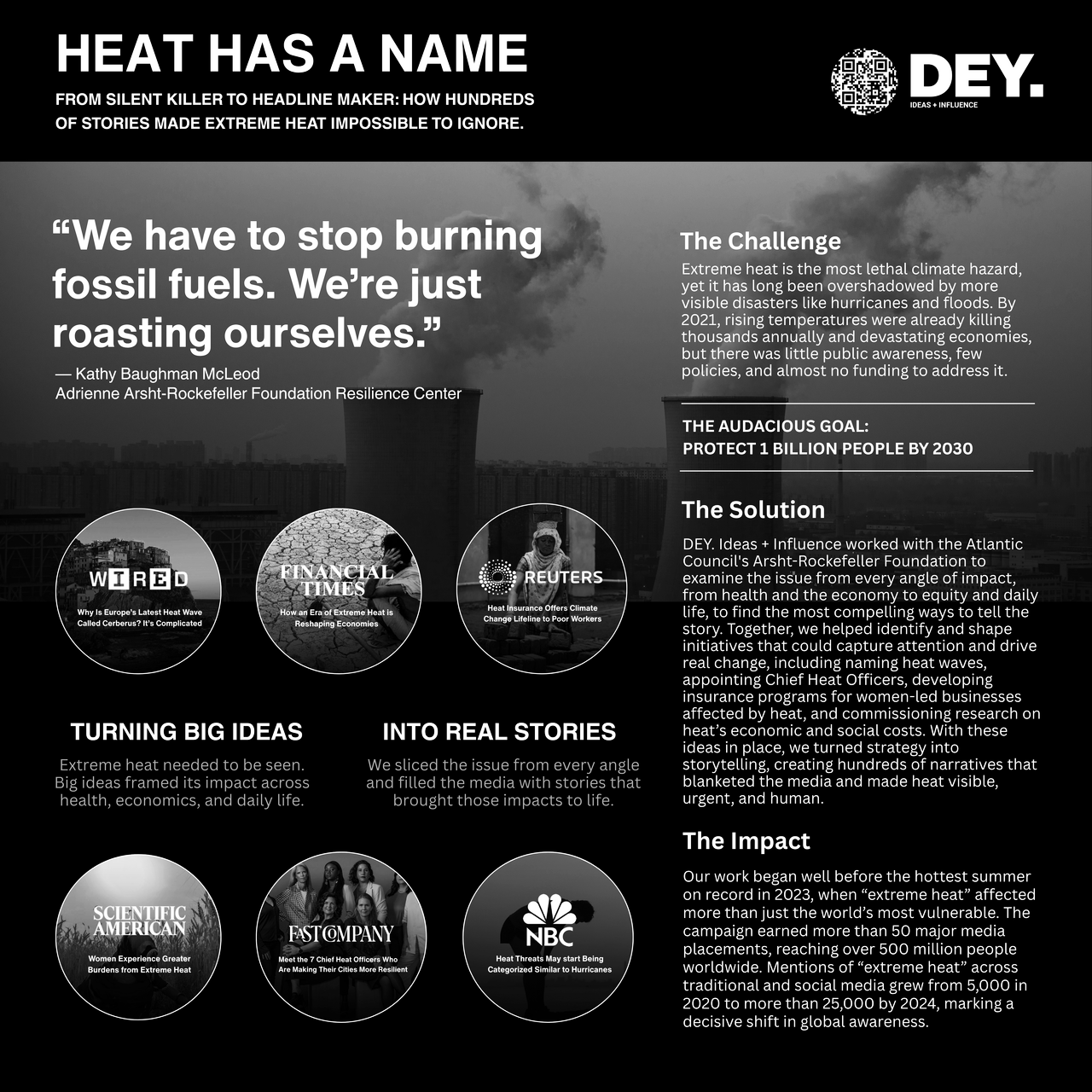
In partnership with the Adrienne Arsht Rockefeller Foundation Resilience Center, the approach became one of careful, layered storytelling. The goal was not to simplify the issue, but to look at it from enough angles that its complexity became clearer rather than more distant.
That meant exploring how heat influences labor and wages; how it affects public health in both immediate and long-term ways; how it shapes mobility, housing stability, and infrastructure; and how it deepens existing inequities that are already felt along lines of race, class, and geography.
The work only resonated when the stories felt close to the ground. That required examples pulled from the texture of daily life. It required visuals that translated something abstract into something recognizable. It required narratives that met people where they already were: in their neighborhoods, workplaces, schoolyards, and commutes.
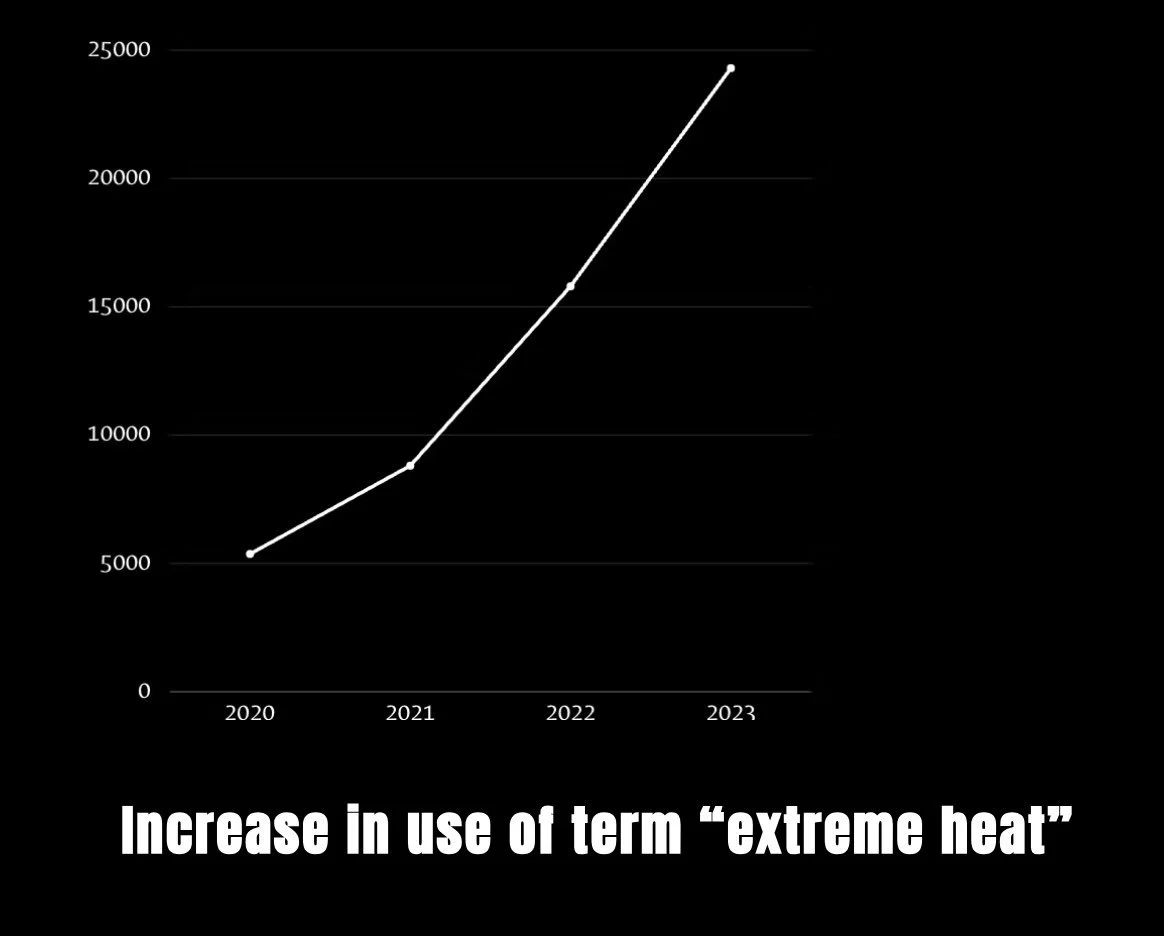
Over time, the shift became visible. Mentions of extreme heat across media rose from roughly 5,000 in 2020 to more than 25,000 in 2024. Coverage reached hundreds of millions of people around the world. Policymakers began reconsidering emergency planning. Local governments made adjustments. Communities started talking about heat in a more immediate way.
A subject that once struggled for any attention at all began to take its place in the broader climate conversation.
A Poster Session That Revealed How Stories Travel
At ComNet, a poster summarizing this work drew steady interest. The display was simple, but the response suggested something more. Attendees lingered not because they were drawn to the format, but because the story offered a familiar challenge: how to communicate something complex without losing its human center.
The poster functioned less as a presentation and more as a case study in how narrative framing works. It suggested that people pay attention when an issue becomes legible on a personal scale. Not only as data, but as something that touches routine decisions, family life, work, and health.
Many communicators recognized the broader implications. If an issue remains too large or too distant, audiences tend to disengage. But when the story is grounded in lived experience, even gradual shifts in understanding can produce meaningful change.
Extreme heat did not simply become visible. It became understandable.
The Ideas That Stayed With Us
People respond to what they can picture.
Heat is difficult to see, which means it is difficult to fear. The shift in awareness grew from stories that offered texture: workers on job sites, families navigating summer temperatures, cities adapting their infrastructure. The images made the issue tangible.Narratives travel further than numbers.
Data alone rarely moves a public conversation. What resonated were the lived consequences and the patterns that showed up across communities. The rise in media coverage reflected that emotional and narrative clarity, not just factual urgency.Understanding expands when complexity is allowed in.
Rather than simplifying extreme heat, the work treated it as a layered issue tied to economics, equity, and culture. That nuance helped audiences see the problem as one that touches many parts of life, not an isolated climate statistic.